Introduction
. 
Writing
is a journey that requires planning, preparation, thinking, rethinking and
flexibility to make adjustments and changes along the way.
The Writing Process
I. Idea Generating – talking , reading, internet searches, brainstorming, quick writes
II. Organizing – outlining, topic balloons, sorting ideas, deciding the important points, eliminating irrelevant points
III.
Writing
IV. Macro-revision – reorganizing ideas, paragraph work, revising thesis statements and topic sentences, check for the flow, working on transitions
V. Micro-revision – sentence level work, word usage, prepositions, sentence structure, grammar
Writing is like athletics or music. It is a process course, not a content course. The process takes practice, practice and more practice. The process is a “step process” that involves learning new ways to express ideas and opinions.
Parts of an Essay
Hook/ attention getter Concluding Paragraph Restate Thesis ·
Restate topic 1 ·
Restate topic 2 ·
Restate topic 3 Punch/Kicker Thesis Statement Body - Support - Support - Support sum up/transition - Support - Support - Support sum up/transition - Support - Support - Support INTRO General Specific

 Essay Format

Module I –
Descriptive Writing
“Making
a Difference”
|
|
|
|
|
|
l
Prewriting –Idea Generating
Discussion questions
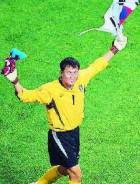
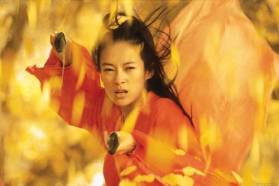
a) Why are the people in the pictures considered heroes?
b) What are the characteristics of a hero or heroine?
c) Does a hero have to be rich? Famous? Kind? Strong?
d) Think of someone you admire and list the reasons you admire them?
Reading 1
|
What is Operation Smile?
Operation Smile is a charitable
organization founded by plastic surgeon William Magee, and his nurse/social
worker wife, Kathleen Magee. On a volunteer mission to the Philippines in
1982, the couple worked to help repair cleft lips and cleft palates of those
who did not have access to medical care. The need for these repairs far
exceeded what the mission could address. In response to this need, the Magees
formed Operation Smile to raise funds and create more missions to countries
where access to repair for facial deformities was limited or completely
non-existent.
Since 1982, Operation Smile has sent medical missions to numerous
countries. It has also partnered with countries to teach local surgeons how
to repair and care for those with cleft palate and cleft lips. Each year
about 10,000 children and young adults have surgery to repair facial defects
through the worldwide efforts of Operation Smile.
While the base of Operation Smile remains in Virginia, there are
several global chapters of the organization that help to raise funds and
organize missions. These include chapters in Los Angeles, London, Rome, Hong
Kong, and New York City. It’s actually fairly stunning how little it costs in
many impoverished countries to repair cleft defects. It usually costs about
240 US dollars (USD) per surgery. This amount seems extremely low when
compared to a similar repair in most western countries. In total, including
aftercare, education programs and need for continued fundraising, Operation
Smile estimates a complete cost of 750 USD per child.
In some cases, Operation Smile brings children to the US for surgery.
Occasionally defects are too complex to be repaired locally. When this is the
case, Operation Smile will fund the transportation of the child and usually
one parent, and pay for not only any needed surgeries but also lodging and
food for the family member. This incurs greater expense, as not all hospital
costs can be completely donated. Generally, children or adults who come to
the US must receive special sponsorship and extra donations.
In contrast, Operation Smile field missions have the volunteer
services of trained physicians and others in the medical field. A high number
of cases can be quickly treated in a few days to a few weeks. This is
generally the most cost-effective way for Operation Smile to help a large
number of people. Yet physicians often leave a mission knowing they could not
help everyone. This keeps people devoted to the cause of raising more funds
to undertake more missions.
Since its inception, Operation Smile estimates that it has
successfully performed reconstructive facial surgery on over 100,000
children. About 86% of its funds raised go directly toward these surgeries
and toward funding medical missions. Operation Smile has also been recognized
with several prominent humanitarian awards. The charity has proven effective,
with positive results and continued goals for helping to improve the lives of
many children and young adults in developing countries. Written by Tricia Ellis-Christensen http://www.wisegeek.com/what-is-operation-smile.htm |

Questions for Discussion
1)
Can you think of other people like the Magees who have
made a difference in the lives of less fortunate people?
2)
Have you ever done volunteer work?
Reading 2
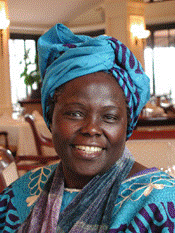
About Wangari Maathai In 2004, Wangari Maathai received the Nobel Peace Prize
for "her contribution to sustainable development, democracy, and
peace." She is the first African woman to ever receive the award. As founder of The Green Belt Movement, an organization
that has mobilized thousands of Kenyans, mostly women, to plant more than 30
million trees across the country, Wangari Maathai is responsible for
providing much-needed firewood, lumber, shade, and even food to thousands of
African families. Now a member of the Kenyan Parliament, she works to spread
her message of peace through grass roots mobilization and by stressing that a
healthy planet makes peace more plausible. To read more about
Wangari Maathai ngo to: http://www.myhero.com/myhero/hero.asp?hero=Wangari_Maathai_MAG http://www.myhero.com/myhero/go/filmfestival/viewfilm.asp?film=wangarimaathai&res=high |
HERO'S HERO:
HEROIC WOMEN
by
Wangari Maathai
|
Women have an innate
sense of service. It is part of who we are. We give rise to new life by
nurturing it inside us for nine months. Then we bring it forth and feed it
with our own milk, with our own body, and eventually, our own self. My mother
was the first strong woman in my life. I know that it was she who instilled
in me a true sense of my own power and my responsibility as a woman. Growing up, I was further
influenced by the communities of nuns and missionaries who ran the schools I
attended. For me, they exemplified solidarity, dedication, and service.
Though I was raised in Kenya, my upbringing was very international. My first
set of teachers were Italian nuns, and the second ones Irish (I still want to
do a jig when I hear Irish music!). I was impressed that these nuns would
leave their own homes and their families to travel to a strange country to
educate us, complete strangers. Since childhood, I have wanted to emulate
these women because they were not only beautiful, smart, and kind, but also
because they showed me what it meant to dedicate your life to something
greater than yourself. For me, that sense of duty and service to the
community was a new way of thinking. In high school I first
met Sister Jean Marie, an Irish nun from the order of Loreto who taught
science. I still think of her often and was touched to learn that she is
buried in Kenya. She and other sisters had given up, in their own words,
"the pleasures of the world" to serve God. They believed in the
inherent good of all people, and one of the ways they served God and a higher
purpose was to give us a good-quality education. Education is a special gift
because it continues to grow and multiply. Our people value education, and
these missionaries endowed us handsomely in this area. Sister Jean Marie took me
under her wing. After experiments, she would invite me into the laboratory to
clean lab equipments and discuss with me the lessons of the day. Her
attention actually made me enjoy the sciences. I was already doing well in my
studies. But when a teacher pays special attention to a student, the student
pays special attention to that class, and I worked extra hard. It was in
large part due to her that I decided to focus my studies on the sciences. I admired certain aspects
of nunhood and would probably have become one if I had been raised as a
Catholic. Having grown up as a Protestant, there was always another competing
voice in my life calling me toward the values of a family. In our culture,
you live for your family and especially the next generation. So the whole
concept of forsaking family life to live in a convent was completely unknown
to us. So I found another way to
serve, out in the world. My mother always told me that from my grandmother, I
inherited a strong sense of wanting to put things right. From the nuns I
learned a deep sense of seeking justice for myself and for others. I knew
that if I could join forces with others and create a community with a goal,
then that goal would be met. So in 1977, we started
the Green Belt Movement. Throughout Africa, women are the primary caretakers
and users of primary resources. They are responsible for tilling the land and
feeding their families. The Green Belt Movement enlists these rural women to
address their own needs--a lack of firewood, clean drinking water, balanced
diets, shelter, and income--by planting trees. Trees provide fuel, food,
shelter, and income to support the children's education and the women's
household needs. On the scientific side, they also improve soils and
watersheds. Our work is often
difficult and accomplished under hostile conditions. Still, the groups of
strong women stayed powerful, and worked towards the common good. Women are
my army: I say, if you need to get something done, enlist women to your
cause. When times were difficult during the struggle for independence in
Kenya, I tried to model myself after the nuns who would come into our rooms
in the middle of the night to encourage us to not be afraid when the Mau-Mau attacked
nearby. Instead, they encouraged us to engage in prayer. I am quite sure they
were afraid, but they didn’t show that fear. They told us we were strong
because we were together, and we were never harmed. To this day, I refuse to
embrace the fears that stand in my way. I tell myself, "So long as we
are working together for good, for service to others, we will not be
harmed." And although sometimes we have been jailed, even beaten, we
have always stayed together and we have pressed on. Together, the women of
the Greenbelt Movement have planted more than 30 million trees--women,
nurturing the earth itself. I am proud to share the
credit for my accomplishments with my mother who gave birth to me, and with
all the nuns who shaped my perception of the world and my role in that world.
My work is the embodiment of their patience, persistence, commitment to
service. |

Questions
1) How did the nuns influence Wangari
Maathai’s life?
2) Which sentence gives the main idea of
this essay?
Organizing
ideas
Exercise 1 – Fill in the chart below to begin
describing a person you think has made a difference in people’s lives.
|
One person I admire for having made a difference
is__________________________ . |
|||
|
Reasons I admire him/her |
How he/she has made a difference |
Personality traits |
Physical appearance |
|
1.
2.
3.
4.
|
1. 2. 3. 4. |
1. 2. 3. 4. |
1. 2. 3. 4. |
Writing
a Thesis Statement
1)
A good thesis statement is important
because it helps the reader identify the main idea in an essay, summary
or research paper. Likewise a
writer can use a thesis statement to begin to organize ideas and develop a plan
for writing. Therefore, a thesis
statement needs to be specific and it needs to have some
element of opinion.
2)
There are many types of thesis statements;
however for now we will look examples of statements that “map” short essays.
Weak-
Many women taught me many valuable things.
Strong - It
was the women in my life who taught me not only to read and write, but about
service and community, the values that guide me still.
Weak – My brother has
done many good deeds in his life so I respect him very much.
Strong – I admire my
brother because he is a caring father, a diligent worker and an active member
of his community.
Weak – Lee
Woon Jae is a great soccer player and a real hero.
Strong
– Lee Woon Jae is a true sports hero because he is a
talented player, a respected team leader and an admired role model.
Exercise 2 – Write
a thesis statement for an essay describing someone you think has made a
difference in people’s lives. Use the patterns above as models.
Descriptive
Writing
Descriptive writing is like painting a picture with
words. Your goal is for your
reader to see the images you have in your mind clearly through words. You want your reader to feel what you
feel. Adjectives, adverbs and descriptive
nouns are the colors you can use to paint with words. Similes and metaphors
can also help to create vivid representations of your ideas for your reader.
Simile –
A figure of speech comparing two unlike objects, phenomenon, animals or people
usually beginning with “like” or “as.”
l
My brother dresses like a clown.
l
The typhoon ripped through the city as if it
were a hungry tiger tearing at its dinner.
l
He runs as slow as a turtle.
Metaphor
- A figure of speech in which a word or phrase
suggests a likeness or analogy between two seemingly unrelated objects or ideas.
l
She is so rich, she
is drowning in money.
l
The fierce storm dug
its deadly sharp claws into the city ripping roofs off houses and smashing
windows.
l
He is such a turtle he will never win
the race.
Exercise 3 – Write a simile and
a metaphor to describe the person in your thesis statement.
ASSIGNMENT
Write a 5 paragraph essay describing someone that you
admire because they have made a difference in other people’s lives. Be sure to
include a simile or metaphor.
Additional readings about heroes:
Everyday Heroes
http://www.oznet.ksu.edu/library/famlf2/MF2556.pdf
Everyday Hero: Jeff May
http://www.rd.com/celebrities/everyday-heroes/everyday-hero-jeff-may/article.html
My Hero’s Hero
http://www.myhero.com/myhero/go/directory/directory.asp?dir=hero%27s
Macro-revision
Check List –Answer
these questions before handing in draft #1:
1)
Does you essay have a hook that catches the readers attention?
2)
Does the thesis statement clearly express the main idea?
3)
Is the thesis statement an opinion?
4)
Do the body paragraphs have topic sentences?
5)
Circle all metaphors and similes with a pencil.
6)
Underline other examples of descriptive writing with a blue pen.
7)
What do you like about your essay? What do you think needs to be improved?
8)
How did you organize you ideas?
9)
Does you conclusion restate the main idea?
10)
Is there a kicker that will leave the reader thinking about your essay?
Micro-revision
Red Flag # 1 Avoid
Using Lazy Words
It
is common for writers to focus on ideas rather than words while composing a
first draft. Therefore, first
drafts often contain many “lazy words” that the writer can replace with more
academic vocabulary. There is a
simple two-step solution. The
writer must first recognize what the lazy words are and then use a thesaurus
and a dictionary to change them to the appropriate academic words. Some examples of lazy words and
expressions are: big, small, let, make, give, thing, and so on, something, him,
them, like, and it.
Example: If a teacher gives the students more freedom, it will let
them learn with smaller stress.
Revision 1: If the teacher allows the students to have more freedom,
they will be able to learn with less stress
Revision 2: Allowing the students to have more freedom enables them to
learn in a less stressful environment.
Working
with Words
Exercise 1
List synonyms for
the words in the table:
|
admire |
influence |
try |
plausible |
dedicate |
make |
|
|
|
|
|
|
|
Exercise 2
Use the following words in a sentence:
1) emulate –
2) influence –
3) dedicate –
4)
persistence –
5)
commitment –
Exercise 3
Write the various forms for the following words:
|
Noun |
Adjective |
Verb |
Adverb |
|
|
plausible |
|
|
|
influence |
|
|
|
|
|
|
emulate |
|
|
commitment |
|
|
|
|
|
|
persist |
|
|
|
|
|
admirably |
|
|
|
commend |
|
|
value |
|
|
|
|
|
just |
|
|
“Advice for Writers”
More Vocabulary
Building
² Students revise sentences from their essays that contain lazy words.
– Every module will have an “Advice for Writers” section.)
Tips for Starting a Vocabulary Notebook
- Try to add 3-5 new words a day. That way you will have 90-150 new words every month.
- Use new words from class, movies, conversation or daily reading.
- Write the word in your notebook.
- Write an easy to understand English definition of the word.
- Write an example that will help you remember how to use the word.
- Review all words daily.
- Try to use new vocabulary words both in your oral communication and in your written assignments.