Module 2 – Comparison and Contrast
Change: For Better or Worse?
|
|
|
|
|
|

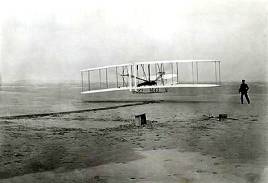
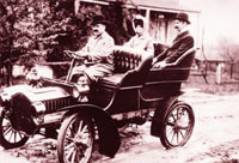

·
Prewriting
–Idea Generating
Discussion questions
a)
How did the inventions in the pictures above change
people’s lives?
b)
In retrospect, what are some of the negative
consequences brought about by those inventions?
c)
In your opinion, what is the greatest invention of
all time? Why?
d)
What is the worst invention of all time?
Reading
1
Written by Matt ChapmanFeb. 15th 2007
Mobile
phones are the second worst items ever invented, according to a recent BBC
poll. The communication devices were beaten only by 'weapons' as the worst
inventions in a survey of 4,164 people for the BBC's Focus
magazine. The weapons category captured 35 per cent of the vote and
included items as diverse as guns, explosives, biological weapons and atomic
bombs. Mobile phones were the
next worst invention, according to 17 per cent of those questioned. Nuclear
power, television and the Sinclair C5 came joint third with nine per cent. "When
contemporary inventions such as the car and the mobile phone, which
apparently enhance modern living, get voted as the worst inventions ever, it
makes you realize that technologies and 'objects of desire' that seem to play
an integral and important part in our lives may not in fact be pleasing the
masses, " said BBC Focus editor Paul Parsons. Surprisingly,
religion snuck into the top 10 with two per cent of the vote. The poll ran on
the Radio Times
website and web surfers were allowed to type in any answer they wanted. The
top 10 in full: Weapons
(35%) From:
http://www.vnunet.com/vnunet/news/2183446/mobile-phones-second-worst |
Questions for Discussions?
- Why do you think
the mobile phone was ranked #2 on the list?
- Which inventions do
you think should not be on this list? Why?
- Explain the adage:
Necessity is the mother of invention?
- Can you think of
instances in which an invention has led to necessity?
Videos:
1) http://www.youtube.com/watch?v=C1PxE_-2uHQ&eurl=http://livinginthepast.us/?p=2259
Considering a Topic
It is important to
focus on a topic for essay #2 soon as possible. The sooner a writer decides a
general topic, the easier it is to move from idea generating to organizing
ideas. Therefore, choose one of the following general topics to consider while
preparing to write essay #2:
·
Life
in the 20th century vs. life in the 21st century
·
Life
in North Korea vs. life in South Korea
·
Living
rich vs. living poor
Language Skills: Noun Clauses
Example
Question: How has television changed family life?
Noun clause: It is important to
consider how television has changed family life.
Noun clauses often begin with the
following words: who, whom, what, where, whether, why, how, that,
whoever, whomever, whatever, wherever, however.
|
Noun clause as a subject |
What television has
really done
is stifled the communication among family members. |
|
Noun clause as an object |
Enabling friends and family to keep in
touch easily is how cell phones have become such a common accessory. |
Exercise 1 –
Fill in the blanks with the appropriate vocabulary word.
minimize impacted applaud preparing
crediting
societal sloth
provided necessity absurdity
If 1)_______________
is the mother of invention then invention might be the mother of 2)_______________. It seems that many inventions are
actually products of attempts to 3)_______________the time a person
spends on a relatively easy task.
For example, Otto Frederick Rohwedder spent 16 years inventing the bread
slicer which actually only saves several seconds in 4)_______________
a sandwich. What the bread slicer
has done for humanity is 5)_______________only an additional 15 seconds
of free time per day. Yet, people often use the cliché: “That’s the best thing
since sliced bread.” Unfortunately, people often 6)_______________ new
technology with a blind welcome that ignores either the 7)_______________
or the negative aspects of an invention. Therefore, before 8)_______________
inventions for their obvious functions, it is important to understand exactly
how “great” inventions have 9)_______________ people’s lives.
Television, though hailed as a milestone in technology, has actually
contributed to the several 10)_______________ problems common today.
Although television has been a great source of entertainment, it has also
changed the ways people communicate with each other.
Exercise 2
Write
sentences using noun clauses for the following topics:
Example:
Computer
a)
How
the computer has facilitated globalization of financial markets is important to
consider.
Globalization
b)
Many
people are unaware of what globalization has done to increase the division
between rich and poor
1)
MP3
____________________________________________________________________________________________________________________________________________
2)
money
____________________________________________________________________________________________________________________________________________
3)
terrorism
____________________________________________________________________________________________________________________________________________
4)
air travel
____________________________________________________________________________________________________________________________________________
5)
modern medicine
____________________________________________________________________________________________________________________________________________
Bonus:
gentrification
____________________________________________________________________________________________________________________________________________
Reading 2
|
The
following reading is an excerpt from, “Encounters in the Morning of the
World: Travels in Bali” by J. H. Crawford. The entire text can be viewed at: http://www.jhcrawford.com/bali/index.html
While public health in Bali has improved greatly in modern times, malaria is still quite common, and infectious diseases pose a significant risk. Infant mortality is reduced but still high. Health clinics and immunizations have helped to reduce deaths among small children. Nutrition is generally improving, and government efforts to control disease vectors have had some success. Those who survive childhood are usually in robust health and often live long lives. Population growth
is only just beginning to come under control in Bali. While statistics are
not to be trusted, it appears that the population of Bali has approximately
trebled in this century. The government's family planning efforts are highly
visible and have recently begun to yield results. Grammar schools are closing
or contracting due to a shortage of students. Whereas families of eight or
twelve are still common, young couples tend to limit themselves to two or
three children. Population growth is placing enormous stress on the carrying
capacity of Bali, and quite a few families have been forced to relocate to
less densely populated islands; usually, a large number of families from a
single village will relocate simultaneously, carrying their culture and
traditions with them. Life for the migrants is often terribly hard, however. Despite the
impression the average tourist may carry away, grinding poverty is still
fairly common in Bali. There are still a good many malnourished children, and
a few who simply do not get enough calories. Many children are forced to
terminate their education prematurely due to lack of money for school fees
and the need for the child's work at home. |
Questions
Language Skills: Adverb Clauses
Adverb
clauses are commonly used to compare or contrast two ideas in one sentence. By
using adverb clauses, a writer is able to expand the variety of sentence
structures in a piece of writing as well as provide smooth transitions for the
reader.
Comparison or Similarity
|
likewise |
Not
everyone living in the city enjoys the nightlife. Likewise, not all people
living in the country are farmers. |
|
just
as |
Just
as
television sets were the “idiot boxes of the 20th century, home
computers are becoming the idiot boxes of the 21st century. |
|
in
the same way |
In
the same way
that city dwellers consider rural life to be boring, country folk often find
cities to be too hectic. |
Contrast
or Difference
|
however |
Many
countries in Asia have experienced great economic development in recent
years; however, the benefits of growth have not been spread equally. |
|
while |
While
many have become better off, many more remain in abject poverty. |
|
although |
Although
television has been a great source of entertainment, it has also changed the
ways people communicate with each other. |
Other words that
can be used to signify comparison or contrast are:
similar to, also, unlike, similarly, again, compared to, in contrast, contrasted with, on the contrary, yet, even though, still, but, nevertheless, conversely, at the same time, regardless, while, despite, despite the fact that, on the one hand … on the other hand. (Note: Do not use “on the other hand” more than once per specific example—people only have two hands!!!)
Exercise 3
For each of the following topics write sentences with adverb clauses that signify either comparison or contrast.
1)
family life
20th century vs. 21st century
____________________________________________________________________________________________________________________________________________
2)
transportation
city vs. country
____________________________________________________________________________________________________________________________________________
3)
culture
South Korea vs. North Korea
____________________________________________________________________________________________________________________________________________
4)
health care
affluent family vs. economically disadvantaged family
____________________________________________________________________________________________________________________________________________
5)
leisure time
children in the country vs. children in the city
____________________________________________________________________________________________________________________________________________
6)
Write one more for your topic
______________________________________________________________________
Writing Hooks
These
words are reminiscent of the famous opening in Charles Dickens’ novel A Tale
of Two Cities: “It was the best of times, it was the worst of times…”
Perhaps one of the greatest hooks of all time, the opening phase of the novel
is often quoted and commonly known to all who have an interest in English
Literature. Likewise, with any hook, the writer hopes to create a work that is
memorable to the reader.
The first
sentence in an essay, research paper, short story or even a novel is considered
to be the “hook” because its function is to hook the reader—that is, catch the
reader’s attention. The hook needs to rouse the reader and convince the reader
that the following sentences are worth reading. Common hooks are:
·
Famous quotations
·
Reference to a famous story or movie
·
Shocking statistics
·
Humorous anecdotes
·
Or pithy questions or phrases
(Note: Although many novice writers use yes/no questions for hooks, a good
writer will work diligently to develop a more descriptive, shocking,
suspenseful or amusing hook.)
Some Examples of Hooks
Famous Quotation:
Reference to a Movie:
From
“Social Exclusion” by Bina
Agarwal
The
spurt in Asia’s economic growth rates has caught the global imagination and
evoked many new images. For instance, fuelled by India’s recent performance, we
have images such as India rising, the giant awakens, the elephant races the
dragon, and so on. However, for millions these remain distant blurs, like the
train speeding by, watched by village children from the fields, in Satyajit
Ray’s 1950s classic film – Pather Panchali. The children of those children, now
adults, want to board that train. But will they get “a ticket to ride”? Or will
they remain unquiet spectators? Until one of them picks up a stone and breaks a
window, as in the film - Ankur - by another remarkable filmmaker – Shyam
Benegal.
From:
http://www.asia2015conference.org/pdfs/AGARWAL_COMMENTS%20ASIA%202015.pdf
Shocking
Statistic:
Whereas London took 130
years to grow from 1 to 8 million, Bangkok took 45 years, Dhaka 37 years and
Seoul only 25 years.