Ecotourism and Community Development

Spirit of Ecotourism

Albert Einstein once said, “Our task must be to free ourselves by widening our circle of compassion to embrace all living creatures and the whole of nature and its beauty.” His words characterize the spirit of environmental education through ecotourism. That spirit is the basis of a philosophy that promotes sustainable development through community cooperation and trans-generational communication. As a scientist, philosopher and teacher, Einstein was well aware of the need to pass on knowledge about the environment from the older generation to the younger generation in order to build an understanding of how to maintain a sustainable relationship with nature. In the last century, environmental education has grown to include more than just field studies in biology and geology. Today, the main objective of environmental education is to teach critical thinking skills that involve problem solving and decision-making for how communities can conserve, protect and promote stewardship of natural resources. Environmental education through eco-tourism is a tool to encourage thoughtfully planned community development based on a shared attitude toward stewardship of valuable natural resources. That shared attitude is a product of common environmental morals and ethics.
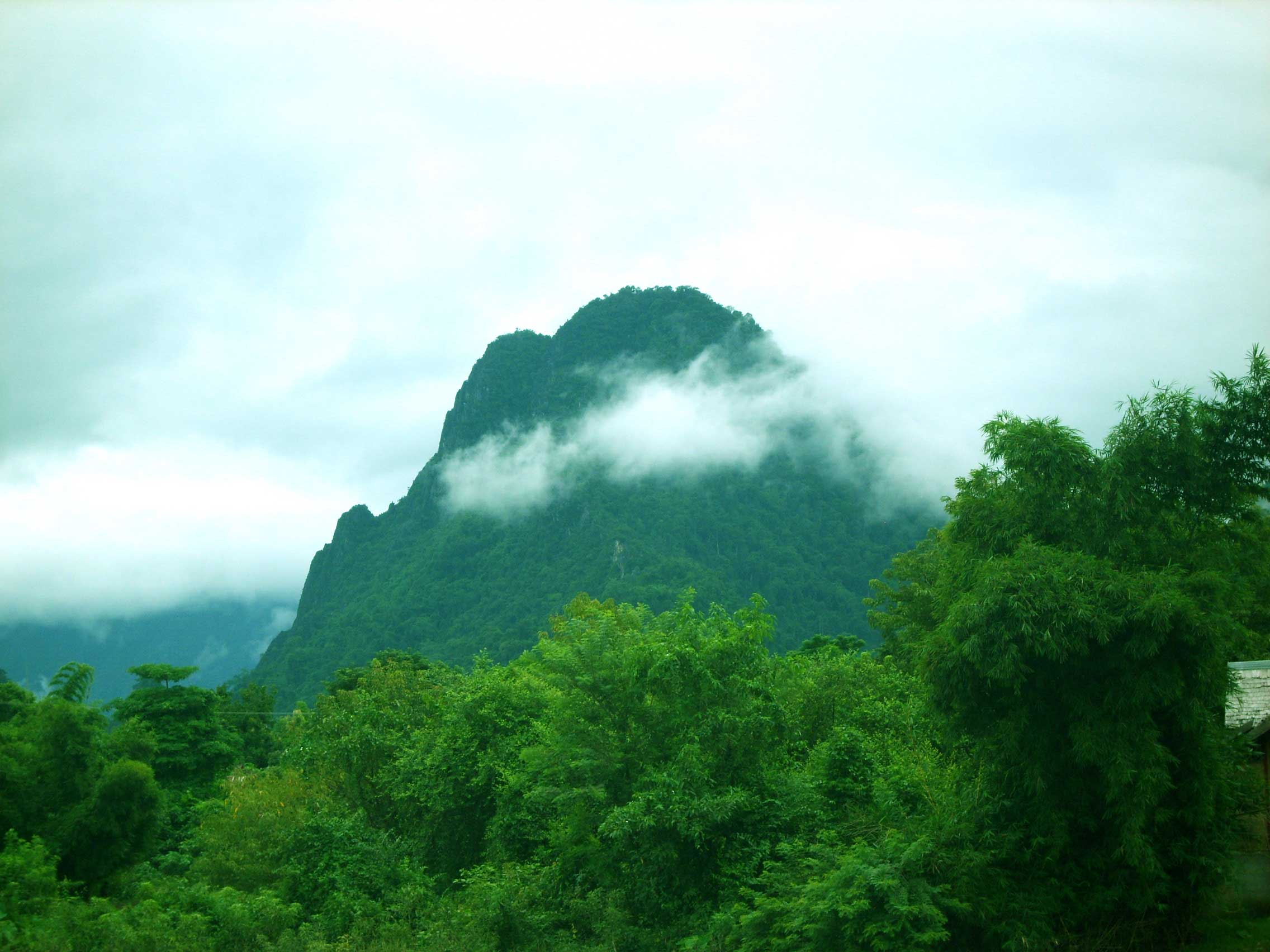
Vang Vieng, Laos

What is Ecotourism?

The International Ecotourism Society, defines ecotourism as “responsible travel to natural areas that conserves the environment, sustains the well-being of the local people, and involves interpretation and education” (TIES, 2015). Since the late 20th Century, ecotourism has been one of the fastest-growing tourism sectors.

For ecotourism initiatives to be successful in both achieving their goals and being sustainable over time, the International Ecotourism Society recommends ecotourism projects be based on several guiding principles:

  • Minimize physical, social, behavioral, and psychological impacts.
  • Build environmental and cultural awareness and respect.
  • Provide positive experiences for both visitors and hosts.
  • Provide direct financial benefits for conservation.
  • Generate financial benefits for both local people and private industry.
  • Deliver memorable interpretative experiences to visitors that help raise sensitivity to host countries’ political, environmental, and social climates.
  • Design, construct and operate low-impact facilities.
  • Recognize the rights and spiritual beliefs of the Indigenous People in your community and work in partnership with them to create empowerment. (TIES, 2015)
Kawasan Falls on Cebu Island, Philippines

Benefits of Ecotourism

Creates Jobs and Income for Local Communities

Since ecotourism projects are community-based initiatives planned and managed at a local level, local citizens participate at all stages of the process. This is a major step toward community empowerment. Ecotourism projects create jobs locally so young people do not have to leave their homes and families to look for work in urban areas. Local youths may work as guides, selling crafts, providing food and accommodation, or taking part in cultural performances. In the best-case scenario, ecotourism improves the standard of living through improved facilities, such as schools, clinics, potable water sources, new roads and electricity.

Environmental Conservation

Through dissemination of environmental knowledge and information, ecotourism contributes to a better appreciation of the world’s natural resources, such as forests, rivers, coastlines and wildlife. New knowledge helps to change attitudes and behavior about how to protect the natural environment through the creation of national parks, wildlife preserves and marine parks. The money tourists pay in sanctuary entrance fees, camping fees, tour fees and taxes help to fund conservation work and community development. Tourist dollars can also help to fight environmentally destructive behaviors such as dynamite fishing, illegal logging, destructive farming and overfishing.

Snorkeling and Diving in Sogod Bay, Southern Leyte, Philippines
Cultural Preservation

Ecotourism encourages tourists to interact with local citizens. This integrative approach to tourism differs from the segregation of the traditional tourists who barely venture out of their westernized hotels. Eco-tourists are likely to experience local lifestyles and customs first-hand. This can foster an interest that helps to preserve the region’s heritage, provide a market for local handicrafts, promote traditional festivals and increase awareness of native ceremonies and art forms.

Building Awareness of Human Rights

In addition to teaching environmental stewardship, ecotourism can raise awareness about political and social issues in developing countries.

Ecotourism is a Tool in Developing a Global Environmental Ethic

As the popularity of ecotourism grows the values and principles become contagious. Environmentally responsible practices among large tour operators and hotels is becoming the norm as more and more establishments globally are practicing recycling, use of renewable energy sources, water-conservation schemes and safe waste disposal

Ecotourism and Community Development

Human impact on the environment is motivating communities all over the world to rethink planning and development. For popular travel destinations, this means communities need to find a balance between capitalizing on the economic benefits of increased tourism and protecting their natural resources for future generations. Tourism-gone-wrong can ruin a community’s resources and create an environmental refugee situation in which locals need to leave a once pristine area due to the impact of too many tourists. Increased tourism creates a strain on potable water sources, waste management and arable land. Effective ecotourism projects should begin with educating local community members by raising awareness of detrimental practices and nurturing a new social consciousness that will result in symbiotic relationships with nature. For small island communities, mountain villages, animal sanctuaries and other common tourist destinations that advertise their closeness with nature, environmental education is fundamental to effecting change in attitudes and behavior. That change is an essential step toward planning sustainable ecotourism projects.

Unfortunately, poverty and myopia in development planning cause people to seek short-term gains without realizing the long-term detrimental effects. It is important that all levels of government take effective measures to ensure ecotourism initiatives maintain sustainable use of the natural resources and their associated ecosystems.

The Responsible Eco-Tourist

Although the eco-tourist may only spend minimal time visiting a particular destination, the tourist also has a responsibility of helping to ensure the success of an ecotourism project.

Tourists need to educate themselves so they can make informed choices before and during a trip. This is the first step in becoming a responsible traveler. Here are some tips for choosing destinations, accommodations, and tour operators for an eco-travel vacation:

1. Do the Due Diligence

Use available resources on the web or in guidebooks to learn as much as possible about destinations, places to stay and tour companies that organize trips. Some key terms for Internet searches are responsible travel, ecotourism, or sustainable tourism.

2. Check the Benefits to the Local Community

After deciding on a destination, try contacting some of the stakeholders in the ecotourism project to learn about their policies. You can ask questions about the percentage of locals among the employees or what percentage of profit stays in the local community. Look for comments either praising or criticizing ecotourism efforts on travel websites.

3. Look for Evidence of Accreditation

Are tour guides trained and certified? Do lodging business have eco-label ratings?

4. Be Pro-Active During the Trip

Communicate with the local citizens as much as possible to learn about the condition of the local environment and understand either the positive or negative impacts of the ecotourism project. If time and logistics permit, volunteer to participate in projects such as reef monitoring, resource assessments or development efforts. Get involved!

5. Be Pro-Active After the Trip

Spread the word via social media or traditional media about successful efforts and responsible ecotourism projects. Offer constructive criticism for projects that are not as environmentally responsible as they could be. Post comments about a destination or tour operator on travel websites.

6. Beware of Green-Washing

As ecotourism has gained much popularity in the last couple of decades, it becomes more difficult to understand what some tour operators mean when using the “eco” label. It is a label that sells, but it is not always a true label. Doing due diligence should help to uncover ecotours that are really just conventional package tours.

Ecotourism in the Philippines

A New Brand of Capitalism

Born-Again Capitalism (Part 2)

“This is not the capitalism I signed up for!” The shriek of Rebecca Henderson’s attack on corporate globalization and her emphatic appeal to change the system are an attention grabber. It is not just the quiver in her voice that invites my curiosity , it is also the fact that she is a Harvard economics professor berating the status quo of corporate America during her TED Talks video (which is more of an advertisement for her book, Reimagining Capitalism in a World on Fire than a real TED Talk). I quickly rewind the video to make sure I heard her correctly. Yes, she really said that.  All I can think is, “Well, Rebecca, you may not have signed up for this brand of capitalism, but for someone who has a net worth of over 30 million, you have benefitted from it handsomely.”

There is a an mounting multitude of top five-percenters who are just like Henderson in that they want to reimagine, rename or at least rebrand capitalism. This “new capitalism” has already arrived and it is a kinder, gentler, friendlier, greener capitalism that vows to preserve and protect our natural resources. (That is important because as it turns out, ruining the environment is actually bad for business. Plus, there is money to be made from natural resources!)

The Old Brand of Capitalism
“It is not from the benevolence of the butcher, the brewer, or the baker, that we expect our dinner, but from their regard to their own interest. We address ourselves, not to their humanity but to their self-love, and never talk to them of our necessities but of their advantages.” Adam Smith, The Wealth Of Nations, Book IV, Chapter II, p. 456, para. 9.

Henderson is not alone in her claim that a new brand of capitalism is a solution (perhaps “the solution”) to the environmental woes and social injustices that the “old brand” of capitalism has heap upon us. Japan’s Prime Minister Kishida refers to a new capitalism in his policy proposals to move away from the recent era of Abenomics. In doing so he criticizes the old capitalism’s neo-liberal policies initiated by Yasuhiro Nakasone in the 1980s that continued during the reform era with the support of Junichiro Koizimi.

In the US, Barrack Obama (net worth: $70 million or so) and John Kerry (net worth: $250 million) have been preaching the good word about how spending more money will save the planet as we transition to green energy. And, every global investment company is touting socially responsible investing – a.k.a, Environmental, Social and Corporate Governance (ESG). Many investment firms and analysts now provide special ESG ratings of companies so that investors can decide if a company is green enough for investment dollars. A high ESG rating for a stock or exchange traded fund (ETF) can help investors feel their investment choices are righteous and that they are now part of the fight against climate change, environmental degradation and social injustice.

The idea of reinventing capitalism is enticing, but is it possible? Would capitalism even be capitalism if people were using their savings and investment dollars in a socially responsible manner that would be good for the environment as well as promote social justice? Would this new brand of capitalism mean that everyone would actually have savings and be able to use money to invest in ESG corporations with high ratings from financial brokers?

These questions highlight the conundrum of Rebecca Henderson’s book. In short, her thesis claims that if corporate CEOs, in unison with politicians and governments, make decisions based on social responsibility rather than short-term profits, the corporate world can create a utopia for the whole world. Sounds a bit like the meaningless tautology, “A hamburger is a hamburger.” A utopia is a utopia. If capitalism were to exist in a world in which everyone put social responsibility first, it would not be creating the utopia, it would be existing in a utopia. Communism or socialism or any other form of economic policy bonded to community government would have the same utopian outcome provided all members of a community made decisions absent of selfish greed and that they, in a community spirit, made decisions dedicated to a proposition of altruism and social responsibility. Even an autocracy would be a utopia if the autocrat were benevolent, selfless and altruistic in governing.


Note: The word “utopia” entered the English language via Sir Thomas Moore’s Latin book in 1516. The Greek word translates into “no place” and was the name of the island community as the setting for Moore’s book. However, the current nuance of the word may differ much from Moore’s Utopia, a place where slavery was a feature of life.


It is easy to agree with Henderson’s claim that unchecked capitalism destabilizes the environment and harms human health. However, her rationale for a new brand of capitalism grows murky as she reasons, “Business is screwed if we don’t fix climate change.” All I am hearing is, “Oh no, we screwed up the environment so bad, it is going to hurt business, Now, we need to fix the environment because that will be good for business. Oh, and we can make it a marketing campaign to sell more goods and do more business.” This is what I call “born-again capitalism”.

What is Born-Again Capitalism?

Born-again capitalism is the green-washing of neo-liberal economic policies that encourage globalization to benefit the rich at the expense of the poor. Born-again capitalism is the belief in and practice of using marketing campaigns that claim products and companies are environmentally friendly and socially responsible in order to sell products and attract investors.

Slave Owners on US Money

The above featured image for this post shows John Trumbull’s 1818 oil painting “Declaration of Independence”. The red dots are courtesy of film maker, Arlen Parsa. The red dots cover the faces of the slave owners who were supposed to be present at the original signing of the the Declaration of Independence. Accordingly, 34 of the 47 founding fathers shown in the painting were slaveholders.

Money can build a community and money can divide a nation. Money has played and is playing a major role in the disarticulation of America. There is an echoing irony in the continuation of honoring slave owners on a nation’s currency. Even South Africa replaced the images of the apartheid leaders—and that was thirty years ago. Why is the US so slow in developing a 21st century mindset? The change should have come 60 years ago during the MLK period of the Civil Rights Movement. Is there any other nation in the world that honors slave owners and human rights violators on their currency?

Would it not promote a better impression of the United States if images of wildlife and scenic destinations decorated US currency instead of controversial dead politicians? It is time for a currency makeover!


George Washington owned slaves before, during, and after his presidency. He held over 600 enslaved individuals throughout his lifetime. His widow freed the remaining 123 within a year of his death.


Jefferson not only enslaved over 600 African Americans, he fathered multiple children with an enslaved woman he kept as a concubine. Jefferson would seem to be the epitome of hypocrisy as he he was a a lifelong slave owner,but condemned the institution of slavery and advocated emancipation.


Abraham Lincoln, the 16th president, never owned slaves, was morally opposed to slavery and issued the Emancipation Proclamation in 1863. However, his wife’s family did keep a small number of enslaved individuals.


Although Alexander Hamilton opposed slavery, he profited from buying and selling enslaved people. Despite any moral objections he held, his social and political ambitions motivated him to use slavery to advance his fortunes—both indirectly and through compromises he chose to make. (BTW, he was never a president. He was a “founding father” and Secretary of the Treasury.)


Andrew Jackson, the country’s 7th president, kept as many as 200 enslaved individuals during his lifetime. He earned a large portion of his private wealth from the slave trade. As president, he introduced legislation that protected slave owners and slavery in the southern states. He did not free his slaves in his will. Not a hypocrite, just a human rights violator.


 Ulysses S. Grant inherited one enslave individual in 1854 who he freed 2 years later. His wife Julia had possession of four enslaved people during the American Civil War. They had been given to her by her father.


Benjamin Franklin was never a president. He was an abolitionist. Still, he owned 2 slaves during his life. Both assumed positions as household servants, yet were legally enslaved individuals.


History is exactly that – history! We can learn from it. We should never forget it or erase it. However, we should not continue to honor historical individuals that profited from human rights violations. We should not ignore their hypocrisies. To do so only teaches our children to recapitulate world views that perpetuate social injustice and manufacture divisions of communities.